
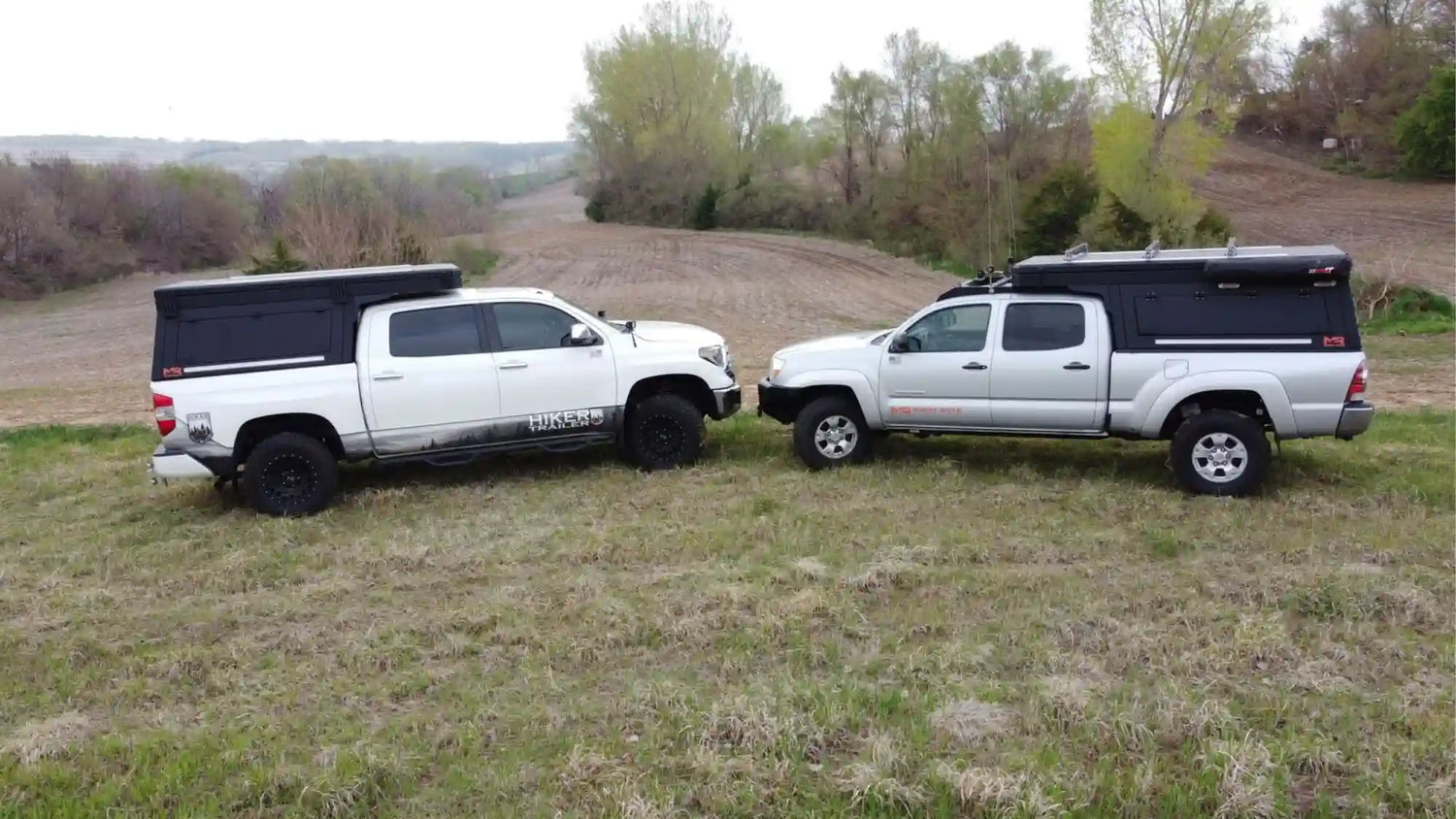
Camping has not slowed down. Outdoor participation has hit record levels for multiple years in a row, with more than half of Americans getting outside for recreation and camping listed as one of the fastest growing activities. At the same time, reports from KOA and The Dyrt show that millions of campers are choosing road trips and truck based camping as their way to travel.
If you own a truck and spend your free time chasing elk, glassing ridgelines, or hunting remote rivers, it is only natural to start looking at wedge truck campers and pop up camper shells. Both options turn your bed into a weatherproof basecamp with room to sleep, cook, and stash gear. Both can ride on the same truck you drive to work during the week.
But they are not the same rig. Wedge truck campers lean into hard sided durability and fast deployment. A pop up camper shell leans into a tall interior space and that tent-like feel. This guide breaks down the differences so you can decide which setup is right for your truck and your style of adventure.
Also Read
TL;DR
Wedge truck campers use a sloped, hard sided pop up design that is incredibly durable, fast to deploy, and better in wind, snow, and rough weather. Pop up camper shells use a full height lifting roof with fabric walls that create more standing room and a bigger interior, but they require more care and usually do not handle harsh conditions as well. If you want maximum durability and quick setup, choose a wedge camper. If you want the roomiest camp interior and more stand up space, choose a pop up camper shell.
Key Takeaways
-
Wedge truck campers are hard sided and usually all aluminum, which means better durability, insulation, and weather protection.
-
A pop up camper shell gives you full standing height and a more open interior but relies more on fabric walls and extra hardware.
-
Wedge designs typically set up in seconds and handle wind, rain, and snow better, which matters for shoulder seasons and winter hunting.
-
Pop up camper shells shine for longer basecamp style trips where you are inside the camper more than you are driving.
-
Your ideal choice depends on how often you move camp, how cold and windy your conditions are, and how you use your truck the other six days of the week.
What Is a Wedge Truck Camper
A wedge truck camper uses a sloped, triangular roof that is fixed at the front and lifts at the rear. When closed, it looks like a low profile topper. When opened, the lift system raises the back of the roof, creating a wedge shape, usually with a sleeping platform up top and open living or storage space below.
Most modern wedge campers are built with aluminum structure and hard panels. The Eddy Topper Camper from Muddy River is a good example of this style, with an all aluminum build, modular panels, and the ability to scale from a standard topper into a full pop up camper as you upgrade over time.
Key characteristics of wedge truck campers:
-
Hard sided construction for better protection and security
-
Simple hinges or gas struts to lift the rear of the roof
-
A raised sleeping platform with extra headroom at the back
-
Low profile on the road, with better aerodynamics than a tall camper box
-
Commonly built to support roof racks, solar panels, and gear cases
Because there is less fabric and fewer complex folding parts, wedge campers are appealing to anyone who travels frequently on washboard, two track, or rough roads and wants gear that will hold up for years.

What Is a Pop Up Camper Shell
A pop up camper shell is closer to what most people picture when they think of a traditional pop up truck camper. The entire roof raises vertically, usually supported by scissor lifts, telescoping posts, or gas struts at each corner. When closed, the camper sits low. When opened, you get full height walls all the way around the bed.
The big difference is that most of the added height is created with fabric, vinyl, or composite soft side panels. That is how you gain so much standing room without carrying a tall, heavy camper when you drive.
Typical pop up camper shell traits:
-
Full height roof lift, often giving six feet or more of headroom
-
Fabric or soft panels around most of the upper walls
-
Big, tent like screened windows for airflow
-
More interior volume for cooking, changing, and riding out storms
-
A bit more setup time and more moving parts to maintain
For people who camp in milder weather and spend more time hanging out inside, a pop up camper shell feels like a small cabin on the back of the truck. You can stand, stretch, and move around more comfortably than most wedge layouts.
Setup Time and Ease of Use
When you pull into camp late, tired, and hungry, setup speed matters.
-
Wedge truck campers usually unlock at the rear and lift with a single push. The gas struts or hinges do most of the work. You can be fully set up in under a minute. That is a big deal on cold nights or when you are moving camp every day.
-
Pop up camper shells are still quick, but you are lifting the entire roof and soft walls. You may need to release multiple latches around the perimeter and raise each side evenly. It is not difficult, just more steps.
If your hunting or scouting style involves bouncing between trailheads and glassing spots every day, the simple, one motion deployment of a wedge camper can save a surprising amount of time and energy over a full season.

Durability and Weather Performance
This is where the differences really stand out.
A hard sided wedge truck camper is built to shrug off wind, blowing snow, and constant road abuse. All aluminum construction is naturally corrosion resistant, and there is less fabric to flap, leak, or wear out over time. That pays off when you are camping in shoulder seasons or at higher elevations where weather changes fast.
Pop up camper shells can absolutely handle normal three season use, but they depend heavily on the health of their fabric walls and seams. Strong winds can make the sides flap and put more strain on zippers and stitching. Cold snaps are harder to manage because thin fabric does not insulate like rigid panels.
If your trips often overlap with winter camping advice you might read in Muddy River’s Cold Weather Truck Camper guide, a wedge camper is usually easier to keep warm and dry. For anyone interested in minimizing environmental impact while camping, it is also worth learning and following the Leave No Trace principles, which apply whether you run a wedge camper, a pop up shell, or a ground tent.
Interior Space and Comfort
There is no question that a pop up camper shell wins the pure headroom contest. With the roof fully raised, you can usually stand upright almost anywhere inside the camper. That makes it easier to cook inside during a storm, change clothes, or stretch out on long trips.
Wedge campers trade some of that stand up space for a simpler structure and better weather performance. You get sitting and kneeling height over the bed, plus extra headroom at the lifted end of the wedge. Most people sleep up in the wedge section and use the lower bed area for storage, dogs, or a compact kitchen.
A smart approach is to be honest about how you actually camp.
-
If you spend most of your time outside hunting, fishing, or exploring, and only go inside to sleep, a wedge truck camper is usually more than comfortable enough.
-
If your trips include more bad weather layover days or you prefer cooking and hanging out inside the rig, the large interior of a pop up camper shell will feel better long term.
Weight, Fuel Economy, and Truck Compatibility
Both systems are lighter than full slide in campers, but there are some differences that matter.
Wedge truck campers built from aluminum are usually very weight efficient. That means less impact on fuel economy and payload, and better stability off road. It also makes them easier to install or remove without special equipment.
Pop up camper shells can be light as well, but the all around lift hardware and soft side structure can add up. Some models are not designed to support heavy roof racks, rooftop tents, or large gear boxes, so you need to confirm load ratings before bolting anything up top.
Either way, you still need to pay attention to your truck’s payload rating. Resources like Muddy River’s own truck camper buying guide and third party camping reports from KOA and the Outdoor Industry Association are good reminders that more people are loading up their trucks than ever before.
Cost and Long Term Value
On paper, wedge truck campers and pop up camper shells can land in similar price ranges, depending on materials and features. The long term costs, however, can look different.
-
A wedge camper’s hard sided, all aluminum build generally lasts a very long time. Panels can often be repaired or replaced individually if something gets damaged. There is less fabric to replace and fewer complex lift mechanisms to service.
-
A pop up camper shell may have a slightly lower entry price in some cases, but its soft side materials have a finite lifespan. Sun, wind, and weather will eventually wear on the fabric and clear windows, especially if you live in harsh climates or leave the camper stored outdoors.
If you plan to keep your rig for a decade or more, that long term durability makes the wedge style very attractive.
When a Wedge Truck Camper Makes the Most Sense
Choose a wedge truck camper if you:
-
Hunt, fish, or scout in cold, windy, or shoulder season conditions
-
Move camp frequently during a trip
-
Want a very fast, simple setup at the end of long days
-
Need a roof that can carry racks, solar panels, or gear boxes
-
Prefer hard sided security for optics, firearms, and other high value gear
This is the user who reads cold weather guides, power system breakdowns, and overland shell articles, then chooses the tough, simple solution that will not quit in the middle of nowhere.
When a Pop Up Camper Shell Is the Better Fit
Choose a pop up camper shell if you:
-
Spend more time inside the camper cooking, relaxing, or working remotely
-
Typically camp in milder climates and fair weather seasons
-
Want full standing room and maximum interior space
-
Plan longer basecamp style stays where setup time is less critical
If your ideal trip is parking the truck at a favorite trailhead or river access and living out of a roomy, tent like interior for days at a time, a pop up camper shell fits that use case well.
Wrap Up
Both wedge truck campers and pop up camper shells will turn your truck into a capable adventure rig. The right choice comes down to how you use your truck, where you travel, and how much you value durability versus interior headroom.
-
Pick a wedge truck camper if you want hard sided toughness, simple mechanics, and the ability to handle real weather without fuss.
-
Pick a pop up camper shell if you prioritize standing room, big windows, and a more open, tent like interior.
As camping participation keeps climbing and more people choose trucks as their primary adventure platforms, it has never been more important to match your setup to your actual travel style, not just what looks cool on social media.
Take a hard look at your usual trips, the climate you hunt and fish in, and the gear you carry. Then choose the camper style that supports those realities. That is how you end up with a rig you use often instead of a project that sits in the driveway.
FAQs
Are wedge truck campers better for winter camping than a pop up camper shell?
Generally yes. The hard sided walls and simpler roof structure of a wedge camper make it easier to keep heat in and drafts out, especially when paired with a good heater and insulated bedding.
Can a pop up camper shell handle strong wind and storms?
Many can, but they are more vulnerable than hard sided wedge campers. Fabric walls and more exposed seams mean you need to pay closer attention to campsite selection and regular inspection of the soft materials.
Which option is easier to maintain long term?
Wedge campers usually require less long term maintenance because there is less fabric to replace and fewer complex mechanisms to service. Pop up camper shells will eventually need soft side repairs or replacement if you use them heavily.
Can both wedge campers and pop up shells support roof racks and solar panels?
Some pop up shells can carry roof gear, but many have specific limits. Hard sided wedge campers are more commonly designed with roof load capacity in mind, which makes it easier to add racks, solar panels, or cargo boxes. Always check the manufacturer’s static and dynamic load ratings before mounting anything overhead.
Which is better for daily driving and fuel economy?
Both are more efficient than tall slide in campers, but wedge designs usually sit a bit lower and can be slightly lighter, which helps with aerodynamics and fuel economy. Your tire choice, driving speed, and total payload will still have a bigger impact than the topper alone.
Is a wedge truck camper or pop up camper shell better for a first time truck camper owner?
For most first timers who value simplicity and durability, a wedge camper is easier to live with. There are fewer variables to manage, and setup is more intuitive. If you already know you want the most interior headroom possible and you camp in mild conditions, a pop up camper shell can still be a great first rig.
About the Author
This article was created for Muddy River Outdoors, an American made, veteran owned team that eats, sleeps, and hunts out of the same camper toppers they build. With more than 15 years of manufacturing and design experience, Muddy River focuses on modular aluminum toppers and accessories that work for real hunters, anglers, and overland travelers, not just for showroom photos.

Leave a comment
This site is protected by hCaptcha and the hCaptcha Privacy Policy and Terms of Service apply.