
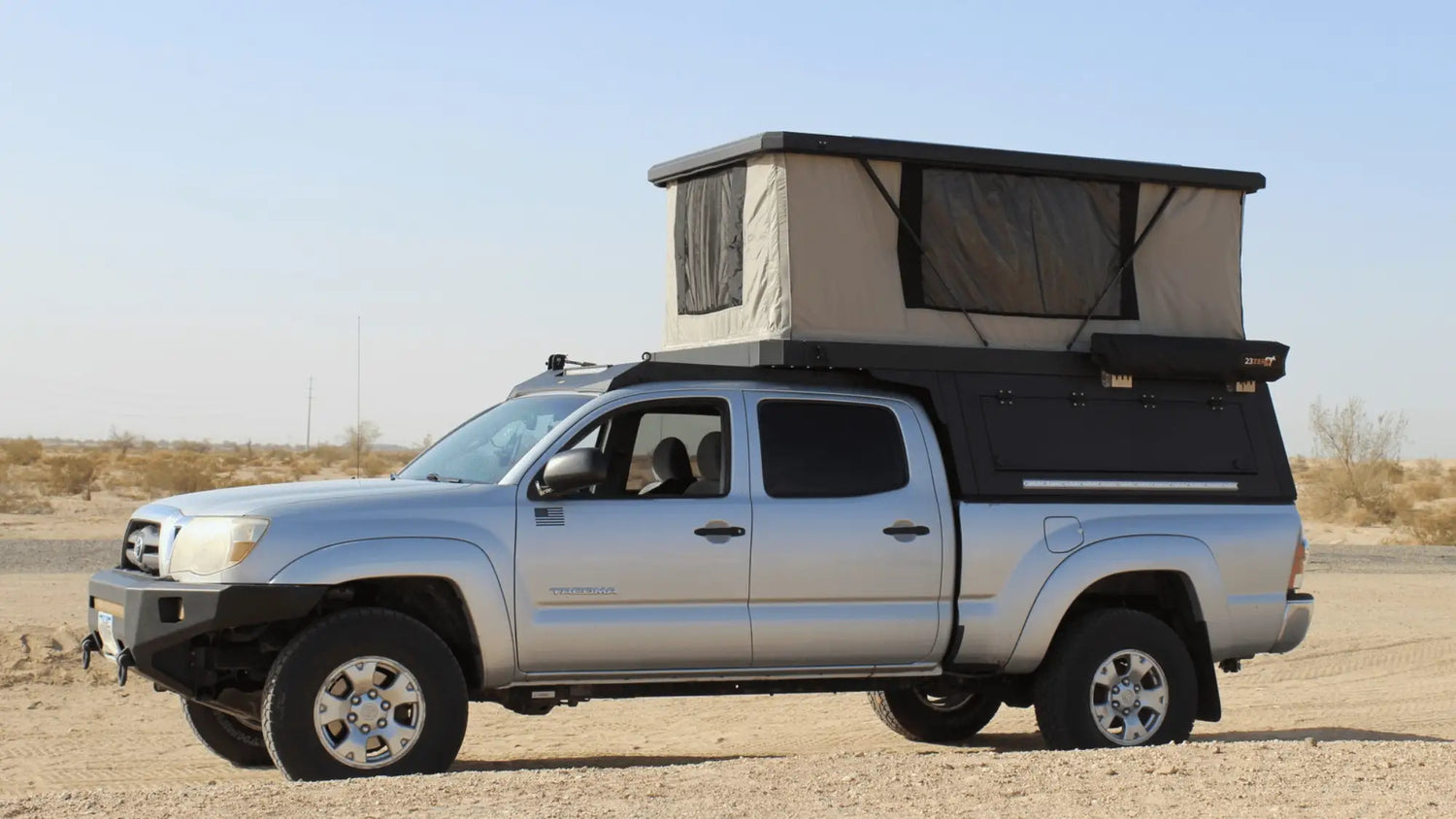
If you own a pickup truck and have started researching camping setups, you have probably noticed that the terms camper topper and truck cap camper are used interchangeably. That overlap causes confusion for buyers, especially hunters, anglers, and overlanders trying to build a functional rig without wasting money.
In reality, camper toppers and truck cap campers come from different origins and are designed with different priorities in mind. Some are built strictly for cargo protection, while others are designed for sleeping, weather resistance, and off grid travel. Modern modular systems like the Eddy Topper blurs the line between these categories, making it even more important to understand what you are buying.
This guide breaks down the real differences so you can confidently choose the setup that matches how you actually use your truck.
Also Read
For additional background on truck camping systems, these Muddy River resources are helpful:
TL;DR
A truck cap camper usually starts as a cargo focused truck cap and may be adapted for camping. A camper topper is typically designed from the start for sleeping, weather protection, and adventure travel. The best choice depends on whether your priority is work utility, camping comfort, or a blend of both.
Key Takeaways
-
Truck cap campers evolved from work focused caps designed for storage and security
-
Camper toppers are built with camping and sleeping as the primary use
-
Materials, insulation, and roof load ratings vary widely
-
Modular aluminum designs can function as both a topper and a camper
-
Understanding your real use case prevents buyer regret
What Is a Truck Cap Camper?
A truck cap camper typically starts as a truck cap, also called a bed cap or canopy. These caps were originally designed to protect cargo from weather and theft. Contractors, fleet vehicles, and service trucks commonly use them to secure tools and equipment.
Over time, many truck owners began adapting caps for camping by adding sleeping platforms, storage drawers, and basic ventilation. That evolution led to the term truck cap camper.
In simple terms, a truck cap camper is a utility focused shell that can be converted for camping but was not always designed with overnight use in mind.
Common traits of truck cap campers
-
Fixed roof height
-
Minimal insulation
-
Limited ventilation unless modified
-
Focus on storage and security
-
Lower initial cost
Truck cap campers can work well for short trips, mild weather, or users who primarily need a secure bed enclosure with occasional overnight use.
What Is a Camper Topper
A camper topper is designed specifically with camping in mind. From the beginning, these systems prioritize sleeping space, ventilation, and weather performance. Many include features such as roof vents, pop up sections, insulated panels, and reinforced roofs for accessories.
Camper toppers often fall into two categories:
-
Fixed height toppers designed for sleeping platforms
-
Pop up or wedge style toppers that increase interior headroom
Unlike traditional truck caps, camper toppers are intended to support extended trips, changing weather conditions, and accessory systems like roof racks and solar panels.
The key difference is intent. Camper toppers are designed to be lived in, not just loaded with gear.
Camper Topper vs Truck Cap: Side by Side Comparison
Purpose and Primary Use
Truck cap campers prioritize cargo protection and versatility for work. Camping capability is often secondary. Camper toppers prioritize overnight comfort, shelter, and adventure use from the start.
Interior Layout and Sleeping
Most truck cap campers require DIY modification to become comfortable sleeping spaces. Camper toppers often include built in platforms or layouts optimized for sleeping and storage.
Access Points
Truck caps usually offer rear access only, sometimes with side windows. Camper toppers often include side access panels, doors, or lift up sections for better usability at camp.
Ventilation
Ventilation is critical for sleeping. Camper toppers typically integrate vents or fans. Truck caps may require aftermarket solutions to prevent condensation.

Materials and Build Quality
Material choice heavily influences durability and weight.
Aluminum
Aluminum camper toppers offer excellent strength to weight ratio, corrosion resistance, and long lifespan. They are also easier to repair in the field.
Fiberglass
Fiberglass caps are common in truck cap campers. They look clean and are lightweight but can crack under stress and are harder to repair.
Composite
Composite materials vary widely in quality. Some perform well, while others degrade faster under UV exposure and harsh conditions.
For frequent campers, aluminum construction often provides the best balance of durability and long term value.
Roof Load Ratings and Accessories
Roof load ratings are one of the most overlooked differences.
Many truck caps are not engineered to support dynamic roof loads while driving. Adding roof racks, cargo boxes, or solar panels can exceed design limits.
Camper toppers are more likely to include published static and dynamic roof load ratings. This matters if you plan to mount:
-
Roof racks
-
Awnings
-
Solar panels
-
Cargo boxes
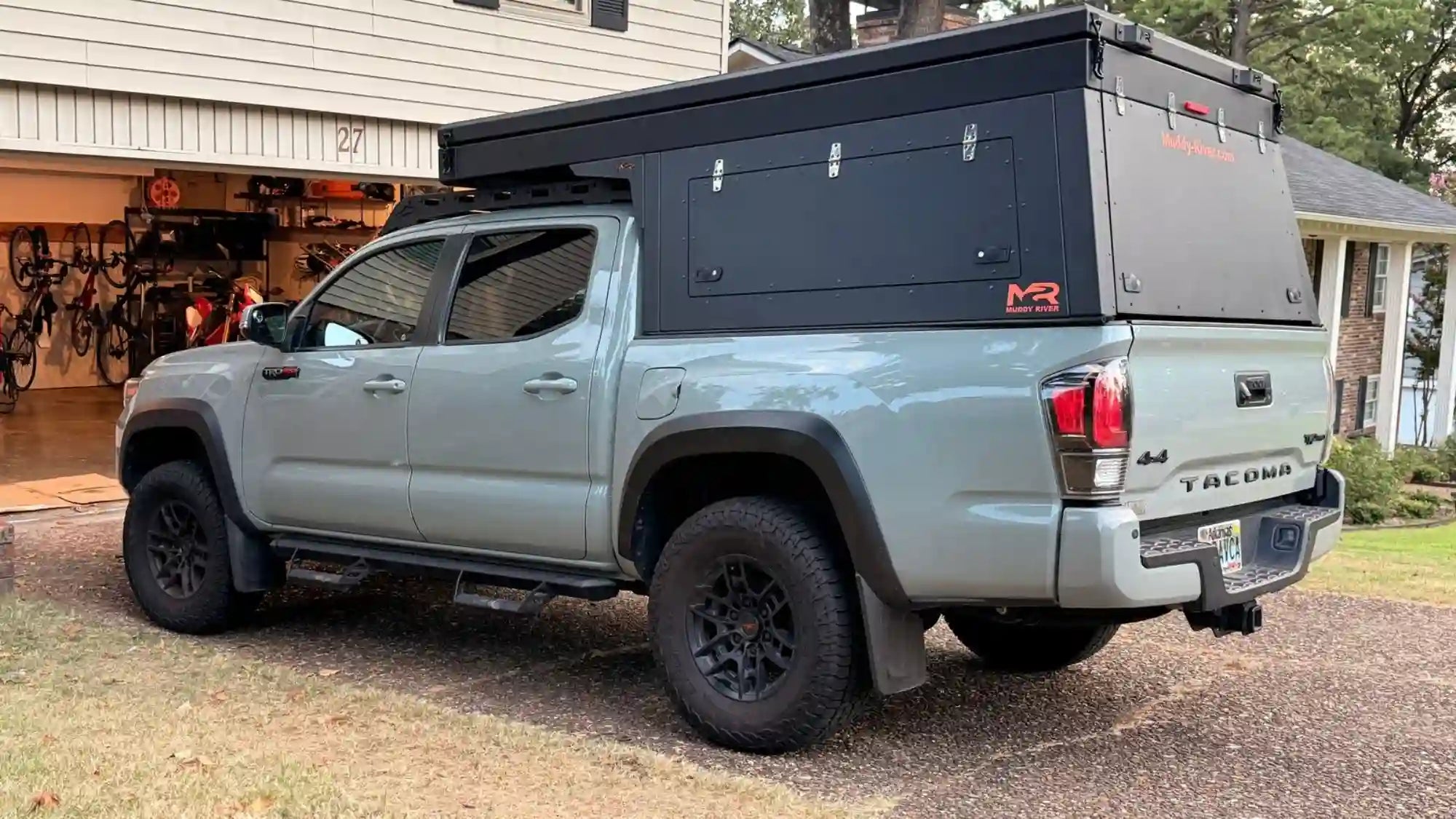
Modular aluminum systems like the Eddy Topper are designed to support accessories safely, allowing the camper to grow with your needs rather than requiring replacement later.

Weather and Seasonal Performance
Weather performance separates casual camping setups from serious ones.
Truck cap campers work well in fair conditions but struggle in:
-
Strong wind
-
Heavy rain
-
Cold temperatures
Camper toppers, especially hard sided or wedge designs, perform better across seasons due to improved sealing, insulation options, and reduced fabric exposure.
Regardless of setup, responsible camping practices matter. The Leave No Trace Center for Outdoor Ethics outlines principles that help protect public lands and keep camping areas open.
Cost and Long Term Value
Truck cap campers often have a lower entry price, especially if purchased used. However, converting them into comfortable camping rigs adds cost over time through insulation, ventilation, and storage modifications.
Camper toppers may cost more upfront but usually offer better long term value through:
-
Purpose built camping features
-
Modular upgrade paths
-
Better resale value
-
Longer service life
The true cost should be measured over years of use, not just the purchase price.
Which One Is Right for You
Truck Cap Camper Is Best If You
-
Use your truck primarily for work
-
Camp occasionally in mild conditions
-
Want a low cost, flexible solution
-
Are comfortable with DIY modifications
Camper Topper Is Best If You
-
Camp frequently or in varied weather
-
Want a ready to use sleeping setup
-
Plan to add roof mounted accessories
-
Prefer durability and modular upgrades
Being honest about how often and where you camp is the best way to avoid buying the wrong system.
Wrap Up
Camper toppers and truck cap campers may look similar at first glance, but they serve different purposes. A truck cap camper starts as a utility shell and can be adapted for camping. A camper topper is designed from the ground up for sleeping, shelter, and adventure travel.
As truck based camping continues to grow, understanding these differences helps you invest in a setup that supports your lifestyle instead of limiting it. Choose based on function, climate, and long term use rather than labels alone.

FAQs
Are truck cap campers good for sleeping?
They can be, but often require modifications like platforms and ventilation to be comfortable.
Can a truck cap be converted into a camper?
Yes, many people convert truck caps into basic campers, though performance varies by material and design.
Which option is better for winter camping?
Camper toppers, especially hard sided designs, perform better in cold and windy conditions.
Do camper toppers affect fuel economy?
Any topper adds weight and changes aerodynamics, but lightweight designs minimize impact.
Are aluminum camper toppers worth the cost?
For frequent campers, aluminum toppers often provide better durability, repairability, and long term value.
About the Author
This article was created for Muddy River Manufacturing, a veteran owned company focused on building modular aluminum camper toppers for real world use. With more than 15 years of manufacturing and design experience, Muddy River builds durable systems for hunters, anglers, and overlanders who demand reliability on and off the road.


Leave a comment
This site is protected by hCaptcha and the hCaptcha Privacy Policy and Terms of Service apply.